
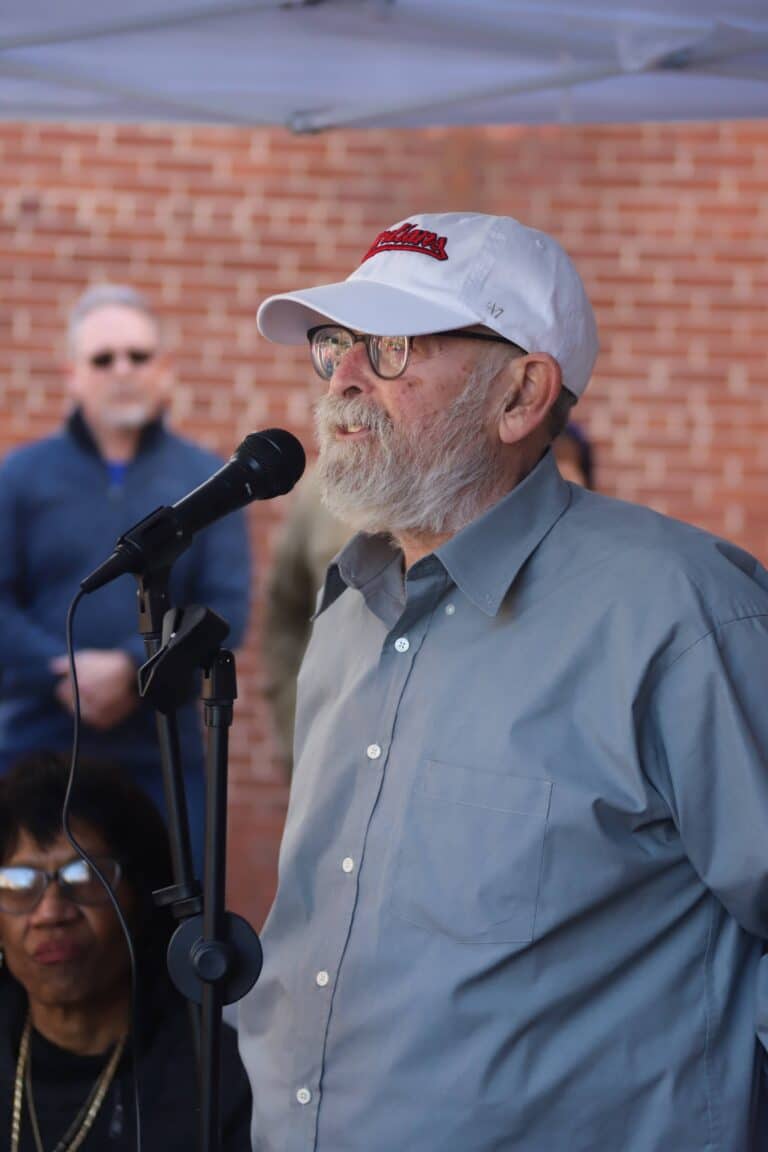
Michael Charney (March 31, 1950 – January 2, 2026) was a prominent educator, labor leader, and political strategist based in Cleveland, Ohio. Known for his “tactical and strategic brilliance,” Charney dedicated his life to social justice, public education reform, and the labor movement. He was the husband and longtime political partner of the late Ohio State Senator C.J. Prentiss.
Charney was raised in a progressive family in Worcester, Massachusetts. His parents were involved with the Friends of the Student Nonviolent Coordinating Committee (SNCC), a support group for civil rights organizing in the South. His early political consciousness was shaped by childhood experiences, including a 6th-grade class where he sat beside Kathy Ambush (the future first wife of Justice Clarence Thomas) and religious school classes taught by future Yippie leader Abbie Hoffman, who spoke to students about U.S. imperialism and Northern racism.
Charney attended Oberlin College, graduating around 1972, where he was active in anti-war protests and the Chicago Seven trial support. Inspired by Stokely Carmichael’s call for white activists to organize white communities against racism, Charney decided to become a teacher.
Charney spent over 30 years as a social studies teacher in the Cleveland Metropolitan School District. He was known for immersive, unconventional teaching methods designed to help students understand oppression, such as a lesson where he bound himself with ropes to teach the history of slavery.
A staunch union activist, Charney served as the vice president and professional issues director of the Cleveland Teachers Union (CTU). In this capacity, he:
We hope you take inspiration from Michael to be a caring, authentic citizen who fights for all people in our struggle for economic and social justice.
RoLesia Holman Tweet
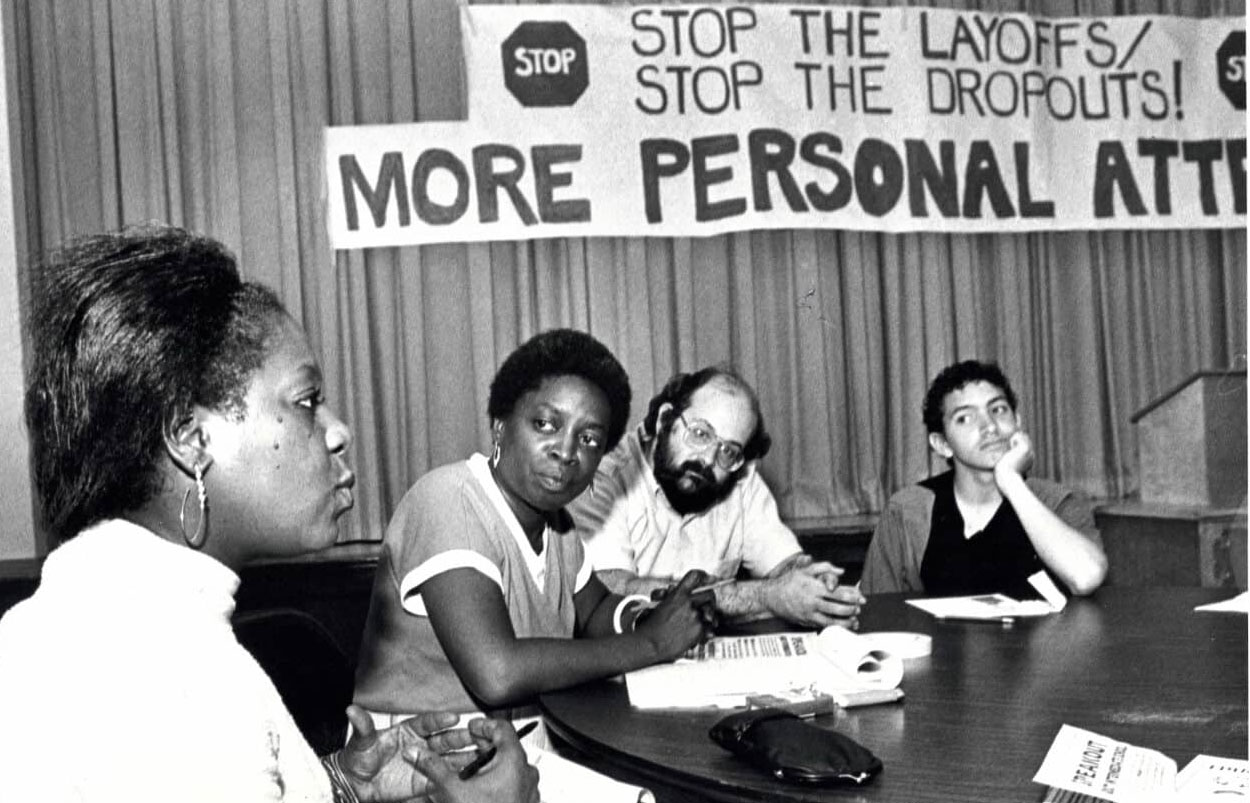
In the late 1970s, following a court order to desegregate Cleveland schools, Charney co-founded WELCOME (Westsiders and Eastsiders Let’s Come Together), an interracial coalition advocating for peaceful desegregation. Through this work, he organized a historic march across the Detroit-Superior Bridge to symbolize racial unity. It was during this period that he met C.J. Prentiss, a fellow organizer; they married in 1981 and remained partners in activism for 43 years until her death in 2024.
Policy and Legislation Charney was a key strategist behind Prentiss’s legislative career, often described as part of a “dynamic force for change”. His contributions included:
Later Years and Legacy
Life in North Kingsville and Continued Advocacy Upon retiring from the Cleveland Metropolitan School District, Charney and Prentiss moved from their home in Cleveland to a lakeside cottage in North Kingsville, Ashtabula County, where Charney spent his time designing and rehabilitating the property. Despite retirement, he remained a tireless advocate for public education. In 2014, he ran for the Ohio State Board of Education (District 7) on a platform that prioritized early childhood literacy, arts and music education, and the regulation of online charter schools to prevent the loss of public funds. Though the campaign was unsuccessful, he continued to serve as a strategic partner to Prentiss during her tenure as a Special Education Adviser to the Governor and in her civic engagement work.
In his personal life, Charney was known for his warmth and curiosity. He was a devoted fan of the Cleveland Cavaliers and Guardians and could often be found walking his dog, Marshall (named after Justice Thurgood Marshall), or enjoying wonton soup at his favorite local café.
Zinn Education Project and the Fight for Historical Truth. Charney’s most significant contribution in retirement was his partnership with the Zinn Education Project, where he applied his strategic mind to national history education. He was fiercely dedicated to combatting the erasure of the Reconstruction era, viewing it as a vital example of interracial coalition-building that brought public education and voting rights to the South.
The Prentiss-Charney Partnership
“They met organizing a walk across a bridge to heal a divided city, and they spent the next 43 years building bridges between labor and legislation, the classroom and the Capitol.”
C.J. Prentiss and Michael Charney were more than a married couple; they were a strategic institution in Ohio politics. For over four decades, they combined the power of a “legislative firebrand” with the tactical acumen of a “grassroots strategist” to fight for racial and economic justice.
Their partnership began in the heat of the 1978 court-ordered desegregation of Cleveland Public Schools. While others feared violence, C.J. and Michael saw an opportunity for unity. They co-founded WELCOME (Westsiders and Eastsiders Let’s Come Together), an interracial coalition advocating for peaceful desegregation.
Their first major joint act was organizing a historic march across the Detroit-Superior Bridge—the physical divide between black and white Cleveland—proving that the community could unite for the sake of its children. They married in 1981, guided by a principle shared at their wedding that would define their careers: “Your influence doesn’t come from your authority, it comes from your authenticity”.
The Prentiss-Charney partnership was effective because they mastered the “inside/outside” game of politics.
Together, they practiced “unapologetic advocacy.” Whether it was Michael binding himself in ropes to teach students about the horrors of slavery or C.J. going on a 10-day hunger strike to force the State Senate to fund school breakfasts for poor children, they were willing to put their bodies on the line for their beliefs.
Their “tactical and strategic brilliance” led to landmark wins for Ohio’s working families:
C.J. and Michael believed their work meant nothing if they didn’t train the next generation. Through the C.J. Prentiss Emerging Leaders Project, they mentored young progressives who went on to become national leaders.
Today, their vision lives on through the Prentiss Charney Fellowship. Launched in partnership with the Zinn Education Project, this fellowship supports a new cohort of “people’s history” teachers who are committed to teaching the truth about Reconstruction and civil rights.
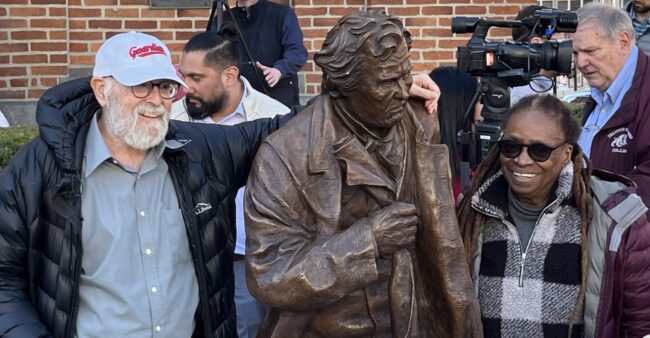
The C.J. Prentiss Education Resource Center (CJPERC) serves as the final, concrete manifestation of the Prentiss-Charney partnership. In the months following C.J. Prentiss’s death in April 2024, Michael Charney dedicated his remaining energy to establishing this center in Ashtabula, Ohio, ensuring that their shared philosophy of “empowering through education” would survive them both.
While C.J. and Michael spent decades fighting battles in Columbus and Cleveland, they spent their final years in North Kingsville, Ashtabula County. The Center was conceived to bring their “transformative vision of public education” to this specific community, serving as a model for how grassroots engagement can close the opportunity gap.
Michael fought to launch the CJPERC because he recognized that legislative wins must be backed by community infrastructure. The CJPERC’s vision, “Building a Foundation for Success,” operationalizes C.J.’s lifelong belief that education is not just about test scores, but about “building character, fostering community, and creating growth opportunities”.
By fighting to launch this Center before his death in January 2026, Michael ensured that the Prentiss-Charney legacy would not be static history, but a living, breathing resource for the “World Changers” of the future.
Please help continue CJ’s legacy of educational excellence and community engagement.